Saturday, 28 July 2007

Zusak, Markus: The Book Thief


I was attracted to this book at first because of 2 things:

1. It was a story about books, and book-stealing no less!

2. It was a story told by Death him-/itself. The first line of the book jacket synopsis and one of the first lines in the story is: "Here is a small fact: You are going to die." How appropriate for Death to say that.

In the end though, it was this 3 aspects that drew me into the story:

1. The well-elaborated plot, not only about books and book-stealing (though those books were an integral vein in the storyline) also about the Germans who suffered in the 2nd World War, and the conditions during that tumultuous time. I think a lot is said about how the Jews suffered, and rightly so, but the Germans not involved in the war suffered as well, like that Malay proverb about the innocent deer (kancil) in the middle of a war between the elephants and the tigers suffering (or something like that...). This book brings that suffering to light, while weaving a magical story about a little girl and her love for books.

2. The characters in the book are well thought out and well brought out in the telling of the story. Everyone gets exposition where due; everyone's story is known in some detail. I especially like the main character as she grows with the ever-worrying circumstances around her. Death as narrator is okay, but more on this later.

3. Zusak's style of writing is amazing. I don't know whether it's because English isn't his native language, or it's just that he's found his own inventive ways of description, but there are many new turns of phrases and descriptions of characteristics that at first seemed slightly odd (with the strangeness that new feels) to me, but came to make me delight in reading the story. All these phrases he uses seem so apt, no cliches at all.
The way he structures the book is superb as well - there is no feeling of discontinuity between the different subplots of the story, and Death's interjections within the story helps give the overall feel to the setting without breaking the story up.

2 things I didn't really like:

1. Death as portrayed by Zusak is a bit too human for my liking. To me, Death sounded more like a human who was saddled with this burdensome task of carrying human souls away, rather than more like, well, Death. The only other person who's written about Death from a 1st-person narrative is Pratchett, and even his Death has some kind of aloofness/untouchability that I feel Death should have.

2. The last line - it doesn't really make sense, or fit into the story, for me. I'm not going to put it here, in case you actually want to read the book (which I really highly recommend!) but it's the kind of sentence that makes you think why it's so when you read it, and it's fine as a sentence by itself, in the context that it's in. But taken with the whole bulk of the story behind it, and with the important role of ending line, it just doesn't make sense. There definitely are more suitable sentences to end a superb novel like this with!

Hopefully I haven't leaked out too much of the story (I don't think so anyway) to spoil the story for you, because YOU SHOULD READ IT! Enjoy...


Rating: *****out of 5

Monday, 23 July 2007

Rowling, J.K. : Harry Potter and the Deathly Hallows


The last book (finally!). How does it fare?

A grinning me went to sign for the book at the security post at 10 pm, and 5 hours later, I could safely say that it fared pretty well.

I had hoped that after the space-filler of a 6th book she'd come back with a vengeance and she definitely delivered. All the books have revolved around something big and important - the Philosopher's Stone, the Chamber of Secrets, etc, while the 6th book revolved around something (the half-blood prince, Snape) that had little bearing on the other events happening. And from the first page there was action, action and more action. There was a dip in the tempo around the middle, when Harry and Co. were meandering aimlessly around trying to find the Horcruxes/Deathly Hallows, but the book seems to echo the change in the tone of the movies - more real magic, more duels, more face-to-face combat, more action. It certainly makes for more enjoyable reading.

I also loved the fact that Snape comes clean in the end, and all because of his love for Lily Potter, Harry's mother. Call me silly, but I think Snape's pretty cool, and it's great that he's absolved, even in the end of this book. She must have given Snape's character development quite a lot of thought, because the whole story falls quite nicely, and is pretty believable.

I could say the same about Albus Dumbledore - that a lot of thought went into him and even when he's died, his name, and really, his whole life story, comes out of the woodworks and is laid bare. So far he's just been the wise mentor, but now he becomes 3-dimensional, and more human.

Harry, as usual, gets this 3-D-ing effect as well, and grows up. Everyone seems more adult in this book, even more adult than in the last. I think her style of writing has grown with her fans, and with this book she's come to accept that she's probably writing more for the grown-up fans than the children. It's still accessible to the younger ones of course, but not as much as the first books. Her style of writing also reflects that she's aware of its transition onto the silver screen. There's more precise descriptions, reminding me somewhat of a filmscript. All in all it has a definite commercial feel to it, which is only to be expected with all the hype about the books.

I didn't like the way she approached deaths. I could hardly register Hedwig's death when it happened, and there was little mention of grief after that. It was as if she killed poor Hedwig off so that Harry had one less thing to carry around during his quest. Bah. Even in the ending battle I had to read it through again to find out that Remus and Tonks died (even now I can't believe that).

Reading through this book, it felt like she could have kept going - all those flashbacks and character developments, plus all the parts she could have stretched out a bit more, or added. Part of me wants more of Harry Potter, but then again, 7 is a nice number (unlike Terry Goodkind's series which has gone on forever, past 10 books when I was last interested) and the ending, however cliche and commonplace, was good. So I smile with pleasure and relief with the thought of a great 7-book series now complete to read from cover to cover, and who knows, Rowling might like to start another series featuring Severus Albus Potter?


Rating: ****out of 5

Saturday, 14 July 2007

Smith, Zadie: On Beauty: a novel


This book was shortlisted for the Man Booker Prize, and won the 2006 Orange Prize for fiction. Apparently Zadie Smith is a scholar of EM Forster and has modeled her book to contain allusions to her “idol”, and yes, her book did remind me a bit of “Howard’s End”. She tells of a family in the US, and what happens as their lives intertwine with the lives of the family members of the patriach’s enemy. And of course, there has to be a confrontation between the two enemies, causing everything to unravel for a while, but get together again by the end of the book.
The characters were well-written, and the story went deep into some issues, but overall it didn’t have much of a wow effect on me, not as much as I’d expect from a prize winner. If you take away the Forster-ian undertones, it just ends up as a well-written story that can entertain for while, like most of the other books on the market. The writers of these other books should really catch on and jump on the bandwagon, and say that their books were modeled after so-and-so author – they might just make it onto a shortlist somewhere. And this is always good for business, because there’s always people like me, curious to see if the book is up to par.


Rating: ***out of 5

Pratchett, Terry: Sourcery, Wyrd Sisters, Reaper Man, Witches Abroad, Small Gods, Soul Music, Maskerade

My journey with Pratchett really started when I got his younger-children book, Truckers (part of the Bromeliad trilogy) as a birthday present, perhaps when I was in late primary school. I loved that book, loved how the Nomes were so ignorant of human customs, and how they’d capitalize all the unknown words borrowed from the human language and put some obscure importance to them. My copy at home is now well-creased from the re-reading. When I found out that there were 2 more books after it, of course I had to read them!
Then I forgot about him for a while, because I thought the Discworld series was so extensive there was no point starting on them. Then the lovely book rental place in Subang Parade, and YP’s dear friend happened – and I had a ready supply of early Discworld books to read. So I read “The Colour of Magic”, “The Light Fantastic”, “Equal Rites”, and “Mort”.
The saga continues with the ready supply of Discworld books in the libraries around me. It’s a good thing that they’re not to be read in any order, so I can simply borrow any book on the shelf.
Truthfully, I can’t tell you exactly what happens in each book, and I won’t even try (thus the grouped review). BUT they’re really great distractions from life! The humour he injects into each book is novel, and each book covers different topics/issues: “Sourcery” tells of a dictatorship of sorts which could lead to the end of the world; “Wyrd Sisters” introduces witches and plays with plays like those of Shakespeare; “Reaper Man” deals with Death not being able to do his job; “Witches Abroad” reintroduces the witches and mixes them with many fairy tales; “Small Gods” takes a tongue-in-cheek look at religions; “Soul Music” is about that “real” soul music – rock music, and is a really entertaining read!; and “Maskerade” takes a look at opera, with lots of borrowing from “Phantom of the Opera”. Some of the allusions and jibes in the books I didn’t really get, but I guess everyone understands different things differently anyway.
That’s the books so far in a nutshell, really. These books are like candy – you can’t read too many at once, but taken one at a time, at regular intervals, they serve to give you a much-needed laugh and a different outlook to life. Which is a great treat!


Rating: ***out of 5

Pelzer, Dave J: A Child Called It, The Lost Boy, A Man named Dave


Dave Pelzer writes, in three parts, of his life so far, from his days existing only as a thing under his mother’s abusive hand, to his escape, life as an adoptee, and his journey to the publishing of his books. The story of his abuse is quite heart-rending, and I think it’s been described as one of the most serious child abuses in America, or something like that. I guess it’s not just the abusing that strikes you, but it’s the fact that his mother actually denied his existence as her son, but treated him as “it” – this thing, only there to be abused and taken advantage of. It’s really quite a depraved world we live in, and the point is driven home by the horrible way he was treated in his childhood.

I would say that the first book is the most riveting, because of this, the sheer magnitude of his experiences. At the end of the first book, he’s rescued, and his life truly begins. Of course, there are episodes where the past (and the mother) comes to haunt him, even in the 3rd book, but things aren’t as shocking as in the 1st, and his straightforward style of writing, while suited and so endearing to telling a child’s point of view, loses its charm as the child grows up. I would say, read the whole trilogy for continuity, and to find out how this remarkable man made his way through the many pitfalls of life he could have stayed in. But always remember the little boy called “it” from the 1st book.


Rating: **** out of 5

Monday, 9 July 2007

McEwan, Ian: Saturday


A book about a Saturday in the life of a neurosurgeon, practising in London. He uses quite a lot of jargon in describing the neurosurgeon's medical life, but doesn't dwell on it, which is good for the nonmedical reader. He also gives quite an insight into the emotions involved, having shadowed a neurosurgeon for a couple of years.

Of course, this can't be any old Saturday that makes it into a book. This is a special Saturday - he sees something 9-11 like as he stands at his bedroom window in the small hours of the morning, which sort of sets the tone for the oddness of the day; there's an anti-war protest in the central London, near where he stays; he gets into an accident with a thug with a neurological problem, which he diagnoses and uses to his advantage, but will haunt him again later in the day; there's a mini family reunion that night that he has hopes and anxieties about. Within all that, the neurosurgeon indulges (or rather McEwan indulges on his character) in musings about war, and terrorism, and his work, and his middle-aged life, and really, life in general. These musings can be quite draggy at times, but on the whole they're quite thought-provoking, and quite cerebral (but appropriately so!).

The writing is of high-standard, and McEwan draws us intimately into the neurosurgeon's life - we feel what he feels, and think what he thinks, etc. The supporting characters are believable as well, and provide good colour for the neurosurgeon's life. I also like the fact that it's set in modern-day London, and I could take out my London A to Z and point out where his house is, which hospital he probably is working at, the routes he takes, etc. - exciting. :)

A good read for me, a maybe biased POV because of the medicine-related character.


Rating: ****out of 5

McBain, Ed: Fiddlers


One of JF’s choices from the horror/thriller line, but I was also attracted because of the title and the bloody violin on the front cover. However, I was quite disappointed that the fiddle/fiddler/fiddling has no big part to play in the main plot - the only fiddler is the blind fiddler who gets killed in the beginning of the book. It's more of an allusion to the killer, I think, who fiddles, or intervenes, in the lives of the ones he murders.

McBain had the task of creating some random murders in random ways and finding a way to connect them all, which he did, and made it enjoyable. You sort of know whodunit midway into the book (why else would he be telling the guy's story as a subplot if he wasn't the killer?) but what you don't know is WHY he did it, which keeps one reading to the end. Apparently this was his last book (he passed away in 2005), and his first books were better than this. If that's so, I'd start reading his first books!


Rating: ***out of 5

James, P. D.: The Lighthouse


If Agatha Christie is the Queen of Crime, PD James is certainly the princess, or the heir apparent. Which is ironic because PD James is now an octogenarian (she was 85 when she wrote this book).

Anyway, "The Lighthouse" is set on an imaginary island of the Devon coast, where a writer, his daughter, and his copy-editor go for a sabbatical of sorts. Their arrival is not taken well by some other guests and inhabitants of the island, and the it is to almost no-one's surprise that the writer is found hanging from the lighthouse on the island. PD James' darling investigator Adam Dalgliesh is sent in to solve the case.

It's a well-written book (especially for an 85-year-old! but I'm not ageist) and each character and their pasts are delved into quite thoroughly, giving lots of sublplots which help plump up the main one. It's even up-to-date - two characters in the book get stricken with SARS, which was a big concern in 2005 (and still is). However, I think that SARS thing was a bit unbelievable, plus the fact that Dalgliesh sort of solved the mystery while he was having dreams from the fever made it look like she was just using it as a means to an end. Just a small hiccup though. A good book to read, but if possible, read her earlier books and get to know the detective Dalgliesh first. Then you'll appreciate this book more.


Rating: ***out of 5

Sunday, 8 July 2007

Hollinghurst, Alan: Line of Beauty


This book won the 2004 Man Booker Prize. I don't think it deserved it. Perhaps, like one of the reviews on Amazon.com, I'm not a sophisticated reader.

But what's to like about it? It's a story of a young gay man in the England of Margaret Thatcher. The story moves slowly, as if he's trying to tell us about each second of the day, and after all the plodding along through so many pages, I didn't feel any closer to, or that I knew any of the characters any better. He may do a good job of portraying gay life in the 1980s England, but I'd much rather read about the general life in 1980s England, which he puts in the passenger seat here. This whole focus on the gay life put me off, really. Comparing it to Sarah Waters' lesbianism writing, I prefer her book, because she's more subtle with it, focusing more on their feelings as a person, rather than a lesbian; Hollinghurst's gay activities are more physically described. Maybe that's how it is in real life, I won't know, but I think he could approach it with more finesse.

Maybe I need to read the book again to appreciate the subtler points of the supposed genius writing that deserved the Booker Prize (over people like Susanna Clarke and Colm Toibin), but I don't think that time will ever come. There are so many better books to read that can be appreciated at first flip.


Rating: *out of 5

Gregory, Philippa: Bread and Chocolate


I don't have the list of titles of the short stories with me, so I can't describe the stories in a bit more detail, but I can tell you that I liked this collection of short stories. It may not really make you think deep and hard, but she can really tell complete stories in this limited setting - stories of human beings, all well-crafted and plucks right at your heartstrings. She's quite good at developing characters, probably from the many historical novels she writes, where she crafts characters and stories from the research she does. Good book for a myriad of emotions.


Rating: ***out of 5

Meet the Authors!

This interesting site lets you watch authors introduce their books to you, and hopefully for them, convince you to read their book(s). There's a huge selection of authors and books to choose from, all contemporary of course.

So far, skimming through their database, I've seen quite a few names I don't know, but there are some I do - Sarah Waters, Adeline Yen Mah, Nora Roberts, Terry Pratchett, etc. Then there are some intriguing ones, like the featured book of the day by a Gervase Phinn, about the Yorkshire Dales - I wonder what and how a person with an interesting name like that would write. There's also this Diana Wynn Jones one, introducing her book "The Merlin Conspiracy", where she wears this neck brace/collar, which I found quite funny. Some of the introductions are really just that - short 1-2 liners about the book. Some other writers go into more detail, and give a bit of background to their writing, which is very informative. Others, like Diana Wynn Jones, don't say anything about the contents at all, but reiterate how exciting the book is.

There promises to be some random fun in choosing books based on "recommendations" from this site!

Gerritsen, Tess: Body Double


I wouldn't have borrowed this book myself, there being so many other books to choose from in the library, but JF loves this genre - horror/thriller/suspense - and I'm pleased with the choice as well. The book centres around Dr. Maura Isles, a pathologist, and her reactions when she finds a splitting image of herself dead in a car parked outside her home. That woman turns out to be her twin, and this discovery sends her on a trip to search out her family ties. Yet there's more to the book than that. The other plot that runs in the book is less evident, being broken up within Maura's search for family, and more ominous, but when they both merge together towards the end of the book the the two forces add up to more than their sum and propel the book to an explosive finish.
There are quite a few coincidental happenings in the book, but on the whole it's a gripping read. I was really disgusted by the killer and the web of deceit that surrounded him, and there were moments of fear for the various characters in danger. The question that Dr. Isles brings up at the end, as she reflects on the happenings of the past few days (in the book) is quite an intriguing one, and Gerritsen doesn't answer it outright, leaving you to your own conclusions. All you philosophers can go debate it out.See Gerritsen talk about her book here.I was quite surprised to see that she's Asian - the name definitely threw me off. Very happy for her though - she's a very successful and talented writer.


Rating: ****out of 5

Saturday, 7 July 2007

Gaarder, Jostein: Ringmaster's Daughter, The


This is the second book of Gaarder’s I’ve read, the first being the much-loved “Sophie’s World”. If you loved "Sophie's World", I'm quite sure you'd enjoy this one as well! And if you didn't like "Sophie's World", well, I think you'd appreciate this one more. For one thing, it's less of a headache because there's no heady philosophy mumbo-jumbo to sift through, only stories of many kinds to enjoy. Yet the delightful simplistic manner in which Gaarder tells his stories (which I hope is reflected well through the process of translation) is still there. The protagonist, Petter, is as endearing as Sophie, and a bit of an eccentric character, which really adds to his likeability as well as his aura of mystery. We follow Petter through his rehasing of his life, and how he came to do the job he had, and now why it's so important that he tell everyone his life story. At the end, there's a little twist to the story as well, a quite unexpected one, but one that reflects the overall magical overtone of the novel.

I love how Gaarder takes a simple plot and weaves it into something magical, with stories in stories. And it appears that he has lots of ideas for stories as well, since there are quite a few usable story ideas in this book of his. I wonder what it would be like to read his works in the original language...

Anyway, a lovely book to read!


Rating: *****out of 5

Fry, Stephen: Liar, The


A hilarious book about a Briton who is a habitual liar. We follow this boy from elementary boarding school all the way through university to his working life, seeing him lie his way through all the way. There's a bit of everything it seems - spywork, relationship, growth, remorse, happiness, sadness, adventure, etc.!

Stephen Fry was actually the other half of the Fry and Laurie Show, Laurie being Hugh Laurie now of "House MD" fame. I recommend watching the show (available at TVLinks) for a great dose of British humour. If you can't, get the book, you'll get that dose too. There may be several British references and jibes that don't come through, and there are some choppy bits in the book that settle down when you've gotten a bit more into the story, but the way it's written is witty and funny and entertaining. I was a bit confused by the spy story weaved into the plot, but I got it in the end, with the ending twist in the story. It's his first book as well, and a good effort at that. Apparently his second book is better - it's entitled "The Hippopotamus", which promises big laughs. We'll see.


Rating: ****out of 5

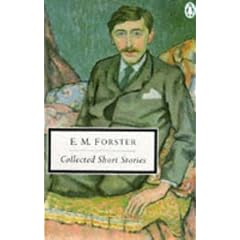
Forster, E. M.: Collected Short Stories


EM Forster is the well-known author of novels like "Howard's End", "Room with a View" (both made into movies), "The Longest Journey", and "Where Angels Fear to Tread". This book contains 12 stories from his two books of short stories. He writes in a very traditionally English way, almost as if he were sitting in front of you and actually telling the story to you himself. In his novels, he has free rein to ramble on and on about things, gradually bringing the story to a conclusion, but although he is restricted here by the nature of the short story he can still maintain his conversational manner while bringing the message across quite effectively.

A lot of the stories have spiritual undertones to it so it was intriguing to read and reflect. For example, "The Celestial Omnibus" is not about a book on the heavens, but an actual bus between Earth and a kind of heaven which a boy discovers and rides on. "The Other Side of the Hedge" tells of a man who is intent on the narrow path before him bounded by hedges on either side, heading towards his unseen goal, until he finds his way through the hedge and discovers the truth about the road he's on.

Others bring up questions about technological advances. "The Machine Stops" tells of a future Earth where everyone shuns the surface and lives underground, their survival depending on a machine.

His ideas are sometimes whimsical as well. There's a story, "The Point of It", which I can't get the point of at all! A well-told story nonetheless. What's good about this particular collection is the introduction, which explains some of his methods of writing, and the backgrounds of some of the stories. I might have found it harder to understand several stories if not for the author's preface. This collection of short stories is not for a lazy afternoon of relaxing reading; perhaps it's more for a good read for a change in subject matter. All in all, a good read to get the brain juices flowing.


Rating: ***out of 5

Thursday, 5 July 2007

Cole, Martina: Maura's Game


I borrowed this because I bought her first book about Maura - Dangerous Lady, and enjoyed Maura’s spunky character as the ruler of the London “mafia”. Maura is the only daughter in an Irish family of sons, who, one by one, join the ranks of the gangs around Notting Hill (another London book! :> ). Like her brothers, she gets pulled into the action and succeeds, and even outperforms her brothers in the business.

This book continues in the same vein, and is an interesting read about how the older and wiser Maura beats her enemies in their game of revenge. However, her style gets tiring soon enough, and while in "Dangerous Lady" she has the plot to carry her on, in "Maura's Game" the plot does this only marginally. I like the original Maura better in "Dangerous Lady" better. I think she spent too much time developing Maura's character with the plot which made it dreary, whereas in "Dangerous Lady" there were other characters to find out more about. Read for continuity, or if you really really like Maura.


Rating: ** out of 5

Clarke, Susanna: Jonathan Strange & Mr Norrell


What drew me to this book, besides the fact that it was magic-related, was its thickness. ;> It's about 7 cm thick (the hardcover is thicker) and I'd somehow heard that it was good.

Jonathan Strange and Mr Norrell are Britain's only two practising magicians in their time (1500s), and it was Mr Norrell who brought the practice of magic back into England, and trained Jonathan Strange. There's a lot of groundwork to lay, and lots of subplots that contribute to the main plot, so there's a lot of meandering around, and lengthy but entertaining footnotes (a bit like Pratchett's style, but more serious/less witty). I wondered sometimes where certain storylines were going, but that will make itself clearer further into the chapter. What I liked was the ending and how almost everything was resolved; but to understand it you'd have to sit through the majority of the book.

It’s NOT the next HP, and the pace is decidedly slow. But if you stick with it till the end the story matures into something quite enjoyable. The whole endeavour might be a bit too much, especially if one has very little time in a day to read, because then bits and pieces of the plot, especially the minor points, will be lost. A book, really, for fast readers, or for those long summer/winter days where there's nothing better to do than read this huge book.


Rating: ***out of 5

Christie, Agatha: By the Pricking of my Thumbs


Starring the endearing duo Tommy and Tuppence Beresford. They first appeared in "The Secret Adversary" as little blackmailers, then got converted into the more respectable detective trade, got married, and in this novel they're a middle-aged couple, going about their business.

It doesn't really start out as a mystery novel, I realise, and if you aren't expecting a mystery, you might be surprised, because of the sedateness of the setting - middle-aged Tuppence, visiting old ladies in a retirement home. The normalcy is only temporary, thank goodness, and Christie sets a tantalising web of mystery for us to unravel. Yes, even old ladies in retirement homes have mysteries about them too!

This is Christie at her usual fine level, and even though they're older, the Beresford pair are still as endearing (though in a long-married couple kind of way now...).


Rating: ****out of 5

Christie, Agatha: Black Coffee


Who doesn’t like Christie? My only regret is that I haven’t read enough of her books, there being so many other books in the library to take advantage of, since the Christie books seem to always be there.
This is a Hercule Poirot mystery, and as usual, well told. Poirot is called in to investigate a murder and a theft of a secret formula stolen from the murder victim - but the theft was done before the murder, and the murder was done in the presence of all the occupants in the house, practically under their noses!

This was actually a play, in fact, Christie's first stage play, and adapted into novel form by a Charles Osbourne (her biographer, I presume). This shows in the book - it's simpler in style and plot, and has a lot of dialogue and action descriptions in it. Nevertheless, a good read. I'd have liked to see it being performed on stage, but I don't think it's being done anywhere now. Christie's "Mousetrap" is still on, though!


Rating: **out of 5

Caldwell, Ian: The Rule of Four


This was one of the books that came out after Dan Brown’s runaway bestseller “The Da Vinci Code” (DVC), and it’s easy to see why this was eclipsed by it – less controversial topic, first time author, etc. My mind took some jostling to remember the plot (who needs prodding to remember DVC's plot?) but when I did, I was pleasantly reminded that it was quite a good book! And apparently, the mystical book with the abnormally long name that's in the centre of the plot is a real book.

For a first-time writer, I think he does a pretty good job of spinning out a story. It got a bit dreary in the middle, where there wasn't any progress to solving the book's mysteries, and the main character is in the usual self-doubt moment. But then it picks up to finish with several twists to the plot and a slightly mysterious ending befitting the story.

If you liked DVC, you'd do well to read this. The writing style is not as polished, but the plot is.


Rating: ****out of 5

Bryson, Bill: Notes from a Small Island


I'd been eyeing him since I heard that his “Short History of Nearly Everything” was quite good, but I rarely make it to the travel literature section in the library (because I've collected too many books browsing the fiction shelves). Then I saw this, his musings about his trip around the UK, and decided to read it first. I just love reading about places that I’ve been to, and places that I could visit (I took out my UK map to follow his tracks), so this was a good first read.

He has a nice conversational tone to his book, and humorous takes on stories and other things that happened to him on his travels. He also describes some cliff and inland walks (eg. the Jurassic Coast trek) that I'd love to do someday, and now have an inkling of how to start (like getting an AA Map.. LoL). In some ways he's better than a guide book, as he goes to all the small overlooked towns/villages around the UK. Granted, some of them are fit to be overlooked by the average tourist, but it's always nice to know that you're not missing much by not going to that particular place.

Look forward to reading more from him.


Rating: *** out of 5

Berg, Elizabeth: What We Keep

Berg writes in quiet way about relationships and stuff like that (Picoult-esque, but less controversial). This particular book touches on the mother-daughter relationship between ones that have only seen each other ocassionally in the last 35 years. There is an element of mystery on why this meeting is taking place now - not a huge one, but interesting enough to keep one reading. The anticipation of the meeting and what happens next would keep you reading on as well.

As far as I've read into Berg, some of her stories are good, and some are just passable but still not a bad read. This was one of those passable ones - simple, but in such a way that it still touches the heart.

Rating: *** out of 5

Atwood, Margaret: Wilderness Tips

A book of short stories, but the author of “The Blind Assassin”. I loved "Blind Assassin", and have always wanted to go back to reading some of her other books, but have only borrowed this one to date, since I was also in the mood for short stories at that time. The trouble with short stories is that they have so little time to develop that they have to be really really really good to stick in your head. I read this a few months ago, and I can't really remember the stories, though from reading the reviews about this book some are coming to mind.

The good thing, though, about short stories is that they leave you lots of room to ruminate on them, and are short enough to be essentially complete in your immediate recall so that you can take in the story in its entirety.

Generally all the stories are good. Most are relational stuff, and if I remember correctly, one ("Death by Landscape") is kind of freaky. Interesting reads, and more accessible storytelling than the older writers (eg. W. Somerset Maugham, EM Forster), which is great for the average casual reader.

Rating: *** out of 5

Atkinson, Kate: Behind the Scenes at the Museum

This book was the winner of the 1995 Whitbread book of the year award. It started of quite slowly, and it was hard to see where it was going, but in the end I got sucked into the narrative and enjoyed it all. Ruby narrating her life story from before birth (even before conception!) was engaging and personable - I could understand and emphatise with her well. The book had an English-y feel to it too, being set somewhere in North England (I think). The plot was helped by the fact that her family was a bit off-centre. There's even a very unexpected twist in the end, that catches the reader quite by surprise.

Just one thing I didn't like - the discontinuity of the chapters, when she intersperses Ruby's narrative with flashbacks from her past relatives' lives. They were interesting in their own right, but it was hard to fit them into the storyline. Of course, in the end everything fits together nicely, so if you do get stuck, keep soldiering on!

Rating: **** out of 5

Wednesday, 4 July 2007

Book reviews, booklists, books, writers, etc.

I've been wanting to record down the books I've read, and what better way to do so than online? :) I've been working on a list of books I've borrowed from the libraries here, so that'll come up soon, with short reviews; then later when I've borrowed more books and borrowed time to write them up hopefully I'll have more things to say on each book.